The private vs public healthcare shift has become one of the most important discussions in India’s healthcare system. People today are more conscious about treatment quality, waiting time, affordability, and convenience when selecting hospitals. This has created a major change in hospital choice, where patients increasingly compare both private and government healthcare options before making a decision. As a result, medical access trends are rapidly evolving across urban and rural India.
Traditionally, public hospitals were the first option for many families because of low treatment costs and government support. However, rising expectations around faster service, modern facilities, and personalized care have influenced the private vs public healthcare shift significantly. Many people now prefer private hospitals for specific treatments, while public hospitals still remain essential for large-scale healthcare access and affordability.
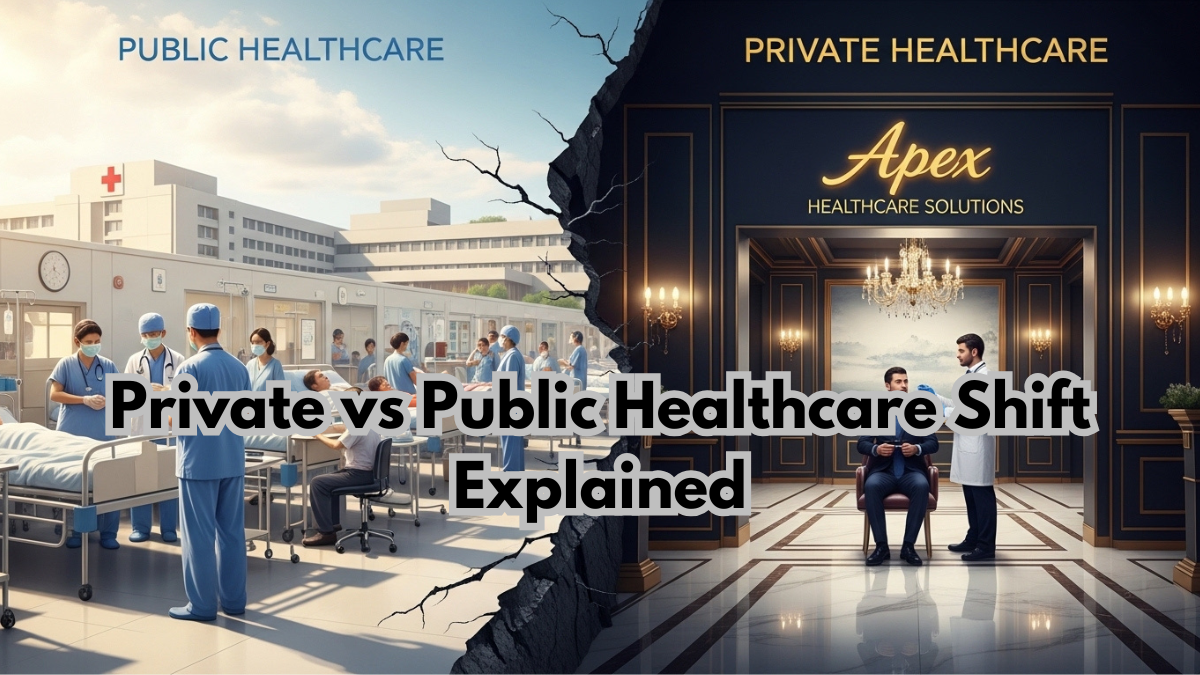
Understanding the Private vs Public Healthcare Shift in India
The private vs public healthcare shift is largely driven by changing patient expectations and healthcare availability. Private hospitals often provide shorter waiting times, advanced medical technology, and more comfortable facilities. This affects hospital choice, especially among middle-class families who prioritize convenience and faster diagnosis.
On the other hand, public hospitals continue to serve a massive population by offering affordable or free treatment. They are especially important in emergency care, vaccination drives, and large-scale disease control programs. Despite infrastructure challenges, public healthcare remains the backbone of India’s healthcare delivery system. These changing medical access trends show that patients now make healthcare decisions based on both financial capacity and service quality.
Factors Influencing Hospital Choice Today
Several practical reasons influence hospital choice in the ongoing private vs public healthcare shift. Patients are no longer selecting hospitals based only on location—they are also considering service speed, doctor availability, insurance support, and treatment transparency.
Some major deciding factors include:
- Waiting time for consultations and surgeries
- Availability of specialist doctors
- Cost of treatment and insurance acceptance
- Emergency care response speed
- Cleanliness and patient support services
- Access to diagnostic technology
These factors strongly shape medical access trends, especially in metro cities where both private and public healthcare options are widely available. In smaller towns, however, limited infrastructure often reduces choices and forces dependency on either government hospitals or a few private clinics.
Comparison Between Private and Public Healthcare
The private vs public healthcare shift becomes clearer when comparing both systems directly. Each has strengths and weaknesses depending on the patient’s needs and financial situation.
| Aspect | Private Healthcare | Public Healthcare |
|---|---|---|
| Treatment Cost | Higher | Lower or Free |
| Waiting Time | Shorter | Longer |
| Infrastructure | Advanced | Varies by region |
| Specialist Access | Faster | Limited in some areas |
| Emergency Capacity | Strong | Large-scale handling |
| Insurance Support | Common | Limited |
This table reflects why hospital choice differs among different income groups. While private hospitals offer convenience, public hospitals remain critical for universal healthcare access. These medical access trends continue to shape policy discussions across the country.
How Medical Access Trends Are Changing Healthcare Decisions
Modern medical access trends show that healthcare decisions are becoming more research-based and technology-driven. Patients often check reviews, compare treatment costs, and seek second opinions before choosing a hospital. Health insurance expansion has also influenced the private vs public healthcare shift, making private treatment more financially possible for many families.
Telemedicine and digital appointments have further changed hospital choice, especially after the pandemic. Patients now expect smoother systems, faster responses, and greater transparency in healthcare delivery. This shift is pushing even public hospitals to improve digital systems and patient communication.
At the same time, government healthcare schemes such as Ayushman Bharat have helped bridge the gap by improving access to treatment. These developments show that the private vs public healthcare shift is not simply about choosing one over the other, but about improving healthcare quality across both sectors.
Conclusion
The private vs public healthcare shift reflects changing expectations in how people approach treatment and wellness. Patients today want both affordability and efficiency, which makes hospital choice more complex than ever before. While private hospitals offer speed and comfort, public hospitals continue to provide essential large-scale healthcare support for millions.
Understanding current medical access trends helps explain why this shift is happening so rapidly. The goal should not be competition between systems, but stronger collaboration that improves healthcare for everyone. A balanced healthcare system must combine accessibility, affordability, and quality so that every patient can receive proper care regardless of income level.
FAQs
Why is the private vs public healthcare shift happening in India?
The private vs public healthcare shift is happening because patients are seeking better treatment speed, advanced facilities, and improved service quality while still considering affordability and accessibility.
What affects hospital choice the most today?
Hospital choice is mainly influenced by treatment cost, waiting time, doctor availability, emergency care, cleanliness, and access to specialist services.
Are public hospitals still important despite private healthcare growth?
Yes, public hospitals remain extremely important because they provide affordable healthcare, handle large patient volumes, and support national health programs and emergency services.
How are medical access trends changing healthcare decisions?
Medical access trends are changing healthcare decisions through digital appointments, health insurance expansion, online hospital reviews, and increased patient awareness about treatment options.
Click here to know more.