For many people today, meals no longer happen at the dining table with full attention. Instead, food is often paired with YouTube videos, web series, reels, podcasts, or scrolling through social media. This growing eating while watching content habit has become a normal part of daily life, especially among students, remote workers, and busy professionals. What once felt like an occasional convenience is now a regular routine.
The rise of the eating while watching content habit reflects a major lifestyle change where entertainment and daily routines are constantly mixed together. This pattern of multitasking eating feels efficient and comforting, but it also affects how people experience hunger, fullness, focus, and emotional satisfaction. Many people no longer realize they are eating—they are simply consuming food while consuming content.
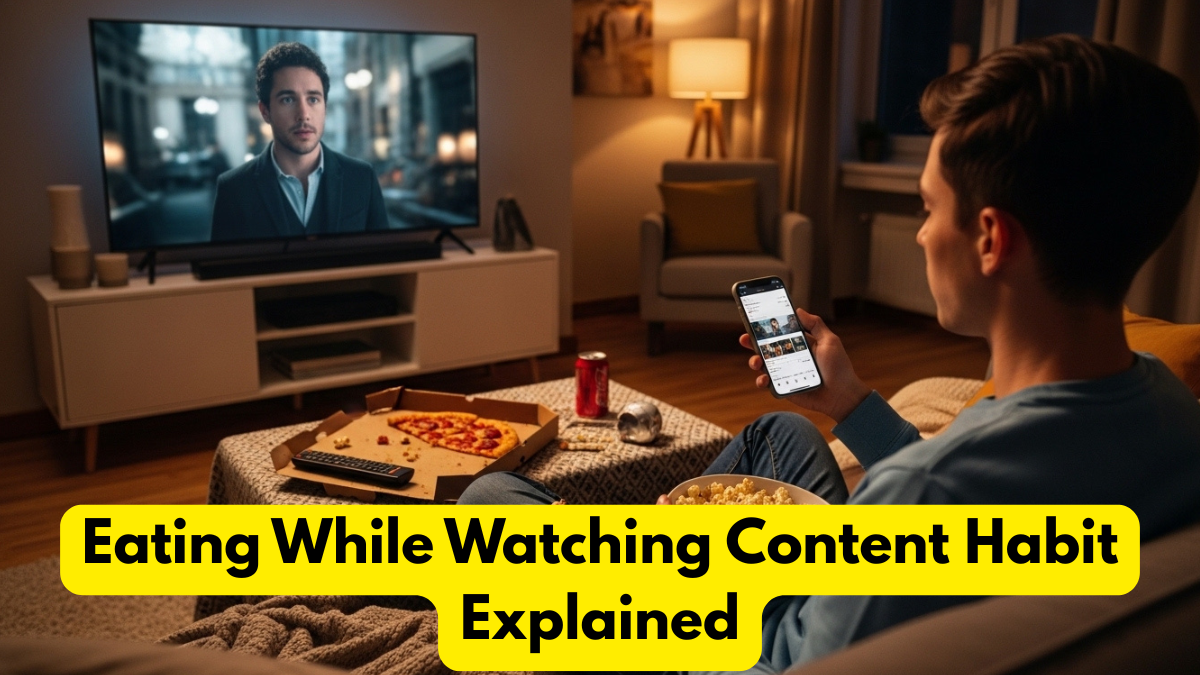
What Is the Eating While Watching Content Habit?
The eating while watching content habit means consuming meals or snacks while attention is focused mainly on digital entertainment instead of the food itself. This could be watching a show during dinner, scrolling social media during lunch, or eating snacks while gaming or working.
This form of multitasking eating often feels harmless because it saves time and makes meals feel less boring. However, repeated distracted eating changes awareness around food. The larger lifestyle change is that eating shifts from being a mindful activity to an automatic background behavior.
Common examples include:
- Watching Netflix during dinner
- Eating lunch while working on a laptop
- Snacking during gaming sessions
- Scrolling social media while having breakfast
- Watching short videos while drinking tea
- Eating late-night snacks during binge-watching
These routines show how the eating while watching content habit has become deeply connected to modern digital behavior.
Why Multitasking Eating Feels So Normal
One reason the eating while watching content habit feels natural is because modern life values speed and constant stimulation. Many people feel uncomfortable eating in silence because the brain has become used to background entertainment. Quiet meals may even feel “unproductive.”
This is where multitasking eating becomes part of a bigger lifestyle change. Phones, laptops, and streaming platforms are always available, making content feel like a default companion during meals. Food becomes secondary while attention moves toward screens.
Major reasons this habit grows include:
- Busy schedules and rushed routines
- Work-from-home blending personal and work time
- Emotional comfort through entertainment
- Reduced family mealtime routines
- Habit of avoiding silence or boredom
- Easy access to constant digital content
This proves that the eating while watching content habit is not just about food—it reflects how daily life is structured.
How This Lifestyle Change Affects Food Awareness
The biggest effect of the eating while watching content habit is reduced awareness of hunger and fullness. When attention is on a screen, people often eat faster and notice satisfaction later than usual. This can lead to overeating or feeling emotionally unsatisfied even after a full meal.
Multitasking eating also changes the emotional relationship with food. Meals stop feeling like personal care and become background activity. This lifestyle change can reduce enjoyment and disconnect people from their natural eating patterns.
Common effects include:
- Eating faster than usual
- Difficulty noticing fullness
- Increased emotional snacking
- Less satisfaction from meals
- Mindless late-night eating
- Reduced connection to taste and portion awareness
This shows why the eating while watching content habit affects both physical and emotional well-being.
Mindful Eating vs Multitasking Eating
Understanding the difference between intentional meals and distracted meals helps explain the impact of this habit. The issue is not occasional entertainment—it is repeated automatic disconnection from the act of eating.
Here is a simple comparison:
| Mindful Eating | Multitasking Eating |
|---|---|
| Attention on food and hunger | Attention on screens and content |
| Better awareness of fullness | Easy overeating without noticing |
| Slower and calmer meals | Fast distracted consumption |
| Emotional satisfaction from food | Emotional dependence on entertainment |
| Stronger digestion awareness | Reduced body-food connection |
This table helps explain why reducing the eating while watching content habit often improves both focus and food satisfaction.
Is Multitasking Eating Always Bad?
Not necessarily. Sometimes watching something while eating can feel relaxing, especially after stressful days or when eating alone. The issue begins when the eating while watching content habit becomes the only way someone feels comfortable eating.
If silence feels impossible or food feels incomplete without a screen, the habit may be controlling the routine. This is where the lifestyle change becomes important to notice.
Warning signs include:
- Feeling unable to eat without a phone
- Finishing meals without remembering the taste
- Emotional dependence on content during food
- Constant snacking during binge-watching
- Using food and content together for stress escape
This does not mean strict rules are needed. It means awareness matters more than automatic multitasking eating.
Balance is healthier than guilt.
How to Build Healthier Meal Habits
Improving the eating while watching content habit does not require removing entertainment completely. The goal is to rebuild awareness and allow some meals to feel intentional again. Small changes create stronger long-term balance.
Helpful habits include:
- Keeping one meal screen-free each day
- Eating the first five minutes without content
- Sitting away from the work desk during meals
- Using slower routines for breakfast or dinner
- Noticing hunger before choosing snacks
- Asking whether the need is food or emotional comfort
These small steps reduce unhealthy multitasking eating while supporting a healthier lifestyle change around food and attention.
Meals should feel like care, not background noise.
Why This Habit Will Keep Growing
The reason the eating while watching content habit is increasing is because digital life keeps expanding. Streaming platforms, remote work, and endless short-form content make screens part of every routine. Eating naturally gets pulled into that system.
This means awareness will become more important, not less. The future challenge is not removing technology, but learning how to keep food connected to presence and self-care.
As people rethink daily wellness, this lifestyle change is becoming an important conversation about attention, not just nutrition.
Sometimes the healthiest habit is simply noticing the meal.
Conclusion
The rise of the eating while watching content habit shows how modern routines are blending food, entertainment, and emotional comfort into one experience. While multitasking eating feels convenient and familiar, it can reduce awareness, satisfaction, and the natural connection people have with meals.
Understanding this lifestyle change helps people create healthier balance without unnecessary restriction. Eating with more attention—even for one meal a day—can improve focus, digestion, and emotional well-being. Food should not only fill time; it should also support presence, comfort, and care.
FAQs
What is the eating while watching content habit?
It refers to eating meals or snacks while focusing mainly on digital entertainment like videos, shows, gaming, or social media instead of the food itself.
Is multitasking eating unhealthy?
It can become unhealthy when it reduces awareness of hunger, fullness, and emotional satisfaction, leading to mindless eating or overeating.
Why has this lifestyle change become so common?
Because busy routines, remote work, and constant access to digital content make screens a default part of daily life, including meal times.
Can watching something while eating ever be okay?
Yes, occasional relaxed entertainment during meals is normal. The concern begins when eating without content feels uncomfortable or impossible.
How can I reduce distracted eating?
Start with one screen-free meal daily, slow down the first few minutes of eating, and become more aware of hunger and emotional triggers before meals.
Click here to know more.