Emergencies such as fires, earthquakes, floods, industrial accidents, and terrorist threats can create dangerous situations within seconds. Understanding how emergency evacuation systems work is essential because these systems help move people to safety quickly and efficiently during critical events. Modern evacuation systems combine alarms, communication networks, emergency exits, surveillance tools, and coordinated response protocols to reduce panic and improve survival rates. Governments, businesses, airports, schools, hospitals, and public facilities all rely on carefully designed evacuation procedures to protect lives during disasters.
Today’s emergency systems are much more advanced than simple fire alarms or exit signs. Modern disaster response infrastructure uses artificial intelligence, digital communication systems, real-time monitoring tools, and automated emergency alerts to guide evacuations more effectively. Proper evacuation planning has become increasingly important as cities grow larger and infrastructure becomes more complex. Exploring how emergency evacuation systems work reveals the combination of technology, architecture, and coordination strategies that help emergency teams manage dangerous situations safely and efficiently.
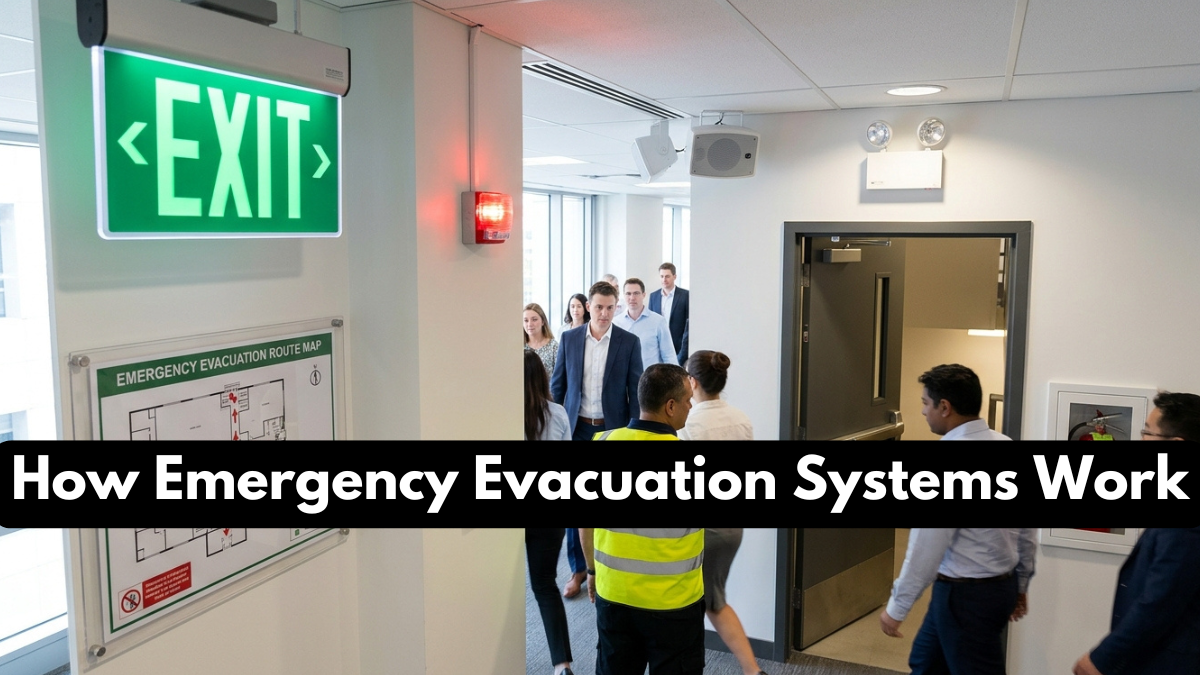
The Purpose of Emergency Evacuation Systems
The primary objective behind how emergency evacuation systems work is protecting human life during emergencies. Evacuation systems are designed to move people away from danger zones while minimizing confusion, injuries, and delays.
Modern evacuation systems focus on several key goals, including:
- Rapid emergency communication
- Safe crowd movement
- Emergency route guidance
- Coordination with rescue teams
- Fire and hazard containment
- Real-time monitoring and updates
Effective disaster response systems rely heavily on preparation and organization. Emergency teams must quickly identify threats, communicate instructions clearly, and manage large groups of people under stressful conditions.
One major reason evacuation planning is so important is because panic can increase risks during emergencies. Clearly marked exits, automated alerts, and organized evacuation procedures help reduce confusion and improve crowd control.
Understanding how emergency evacuation systems work also involves examining accessibility considerations. Modern systems are designed to support elderly individuals, disabled persons, children, and people requiring medical assistance during evacuations.
Advanced buildings now integrate emergency systems directly into their infrastructure, allowing automated responses during fires, earthquakes, or security threats.
Main Components of Emergency Evacuation Systems
Modern evacuation systems combine multiple technologies and safety features to support efficient emergency operations. These systems are carefully integrated to ensure communication, navigation, and safety functions remain operational during dangerous situations.
The following table highlights key evacuation system components and their functions:
| Evacuation Component | Main Purpose | Common Usage |
|---|---|---|
| Fire Alarm Systems | Alert occupants to danger | Buildings and public facilities |
| Emergency Exit Lighting | Guide evacuation routes | Hallways and stairwells |
| Public Address Systems | Provide instructions | Airports, malls, stadiums |
| Smoke Control Systems | Improve visibility | Fire emergencies |
| Emergency Surveillance Cameras | Monitor crowd movement | Control centers |
| Mass Notification Systems | Send emergency alerts | Large public areas |
One important aspect of how emergency evacuation systems work is redundancy. Backup power systems ensure alarms, emergency lighting, and communication networks continue operating even during electrical failures.
Modern disaster response systems also include centralized command centers where emergency personnel monitor building conditions, crowd movement, and hazard progression in real time.
Advanced evacuation planning often uses digital building models and AI-powered simulations to identify the safest evacuation routes during emergencies.
Another important feature involves automated door control systems. Some emergency systems unlock exits automatically while restricting access to dangerous areas during evacuations.
The Role of Technology in Disaster Response
Technology has significantly improved how emergency evacuation systems work in modern buildings and public infrastructure. Artificial intelligence, smart sensors, and automated communication systems now help emergency teams respond faster and more accurately.
Modern disaster response technologies include:
- AI-powered crowd monitoring
- Smart smoke detection systems
- Automated emergency alerts
- Real-time evacuation tracking
- Thermal imaging systems
- Emergency communication apps
One major advancement in evacuation planning involves real-time guidance systems. Digital signs and smart lighting systems can dynamically change evacuation directions based on fire location, blocked exits, or crowd congestion.
Artificial intelligence also improves emergency coordination by analyzing surveillance footage and predicting crowd movement patterns during evacuations.
Understanding how emergency evacuation systems work also requires examining communication systems. Public address announcements, mobile notifications, text alerts, and emergency radio systems help distribute critical instructions quickly.
Modern disaster response systems increasingly integrate with city-wide emergency networks. This allows police, firefighters, medical teams, and transportation services to coordinate responses more efficiently.
Some advanced buildings now use smart elevators designed specifically for emergency evacuations in controlled situations, particularly for individuals with mobility challenges.
Challenges in Evacuation Planning and Emergency Management
Despite technological advancements, emergency evacuations still present major operational challenges. One major issue in how emergency evacuation systems work is managing human behavior during stressful situations.
Common evacuation challenges include:
- Panic and crowd congestion
- Communication failures
- Blocked escape routes
- Limited visibility from smoke
- Infrastructure damage
- Delayed emergency response
Effective evacuation planning must account for worst-case scenarios. Emergency exits may become inaccessible, power systems may fail, or communication networks may become overloaded during large-scale disasters.
Another challenge affecting disaster response systems involves crowded public spaces such as airports, stadiums, shopping malls, and subway stations. Managing thousands of people safely during emergencies requires careful planning and trained personnel.
Understanding how emergency evacuation systems work also involves recognizing the importance of emergency drills and public awareness. Even advanced systems become less effective if occupants do not understand evacuation procedures.
Modern emergency management teams conduct regular evacuation exercises to test response times, identify weak points, and improve coordination strategies.
As urban populations continue growing, evacuation planning is becoming increasingly complex and technologically demanding.
The Future of Emergency Evacuation Systems
The future of how emergency evacuation systems work will likely involve greater automation, artificial intelligence integration, and real-time environmental analysis. Smart buildings and connected infrastructure are already transforming emergency management strategies worldwide.
Future evacuation innovations may include:
- AI-controlled evacuation routing
- Smart wearable emergency trackers
- Autonomous rescue robots
- Drone-assisted emergency guidance
- Predictive hazard analysis systems
- Virtual reality emergency training
One major trend in future disaster response systems involves predictive monitoring. AI may eventually identify potential hazards before emergencies escalate, allowing faster preventive action.
Advanced evacuation planning systems are also expected to integrate directly with transportation networks, traffic management systems, and emergency medical services.
Another important development in how emergency evacuation systems work involves personalized emergency communication. Future systems may send customized evacuation instructions to individuals based on their location, mobility needs, and nearby hazards.
Researchers are additionally developing robotic evacuation assistants capable of guiding people through smoke-filled or dangerous environments during emergencies.
As technology evolves, emergency evacuation systems will likely become more adaptive, intelligent, and capable of responding dynamically to changing disaster conditions.
Conclusion
Understanding how emergency evacuation systems work highlights the importance of preparation, communication, and advanced technology in protecting lives during emergencies. Modern disaster response systems combine alarms, surveillance networks, AI-powered monitoring, and organized evacuation planning strategies to improve safety and reduce risks during critical situations.
As cities become larger and infrastructure more complex, evacuation systems will continue evolving with smarter automation, predictive analysis, and integrated emergency coordination technologies. The future of emergency management will likely depend heavily on intelligent systems capable of guiding people safely and efficiently during rapidly changing disaster conditions.
FAQ
What are emergency evacuation systems?
Emergency evacuation systems are safety systems designed to help people leave dangerous areas quickly and safely during emergencies.
How emergency evacuation systems work during disasters?
How emergency evacuation systems work involves using alarms, emergency lighting, communication systems, and evacuation routes to guide people to safety.
Why is evacuation planning important?
Evacuation planning helps reduce panic, improve emergency coordination, and ensure safe evacuation procedures during disasters.
What technologies are used in disaster response systems?
Modern disaster response systems use AI monitoring, emergency alerts, surveillance cameras, smoke detection systems, and communication networks.
How do buildings guide people during emergencies?
Buildings use emergency lighting, exit signs, alarms, public announcements, and digital guidance systems to direct occupants toward safe exits.
What is the future of emergency evacuation systems?
Future evacuation systems may include AI-powered route guidance, autonomous rescue robots, predictive hazard monitoring, and personalized emergency communication systems.
Click here to know more.