The growing focus on mental health at workplace india reflects a major shift in how organizations view employee well-being and productivity. Rapid economic growth, digital transformation, and competitive work cultures have increased stress levels across industries, making employee burnout a serious organizational risk. Employers are recognizing that sustainable performance depends on psychological health as much as technical skill. Effective strategies such as workplace counseling, supportive hr policies, and resilience-building initiatives are now central to corporate culture. Addressing mental health at workplace india is not only an ethical responsibility but also a strategic necessity for retaining talent and improving productivity in modern Indian workplaces.
India’s workforce is experiencing unprecedented pressure due to long hours, remote work blurring boundaries, and performance expectations. Studies show rising employee burnout across sectors such as IT, finance, healthcare, and startups. Organizations that ignore mental health at workplace india face higher attrition, absenteeism, and reduced engagement. Conversely, companies implementing counseling support, adaptive hr policies, and resilience training report stronger morale and loyalty. The shift toward mental health awareness is transforming Indian workplaces from purely output-driven environments to holistic human-centered organizations.
Understanding Employee Burnout in India
Employee burnout is a state of chronic physical and emotional exhaustion caused by prolonged workplace stress. In the context of mental health at workplace india, burnout often stems from excessive workload, unclear expectations, and limited recovery time. Symptoms include fatigue, disengagement, irritability, and reduced performance. Recognizing burnout early allows organizations to intervene through counseling and supportive hr policies. Building resilience among employees further protects against long-term stress effects.
Common causes of employee burnout:
- Excessive working hours
- Constant digital connectivity
- Role ambiguity and pressure
- Lack of recognition
- Poor work-life balance
- Limited mental health support
Addressing these factors is essential to improving mental health at workplace india.
Role of HR Policies in Mental Well-Being
Supportive hr policies are foundational to improving mental health at workplace india. Policies that promote flexible work, leave balance, and psychological safety reduce employee burnout significantly. Modern hr policies also include mental health days, confidential counseling access, and workload management frameworks. Organizations adopting such policies create cultures where seeking help is normalized rather than stigmatized. HR leadership therefore plays a central role in embedding resilience and well-being into workplace systems.
Effective HR policy measures:
- Flexible work schedules
- Mandatory leave utilization
- Mental health support programs
- Anti-harassment frameworks
- Workload monitoring systems
- Psychological safety training
These hr policies directly strengthen mental health at workplace india and prevent burnout escalation.
Workplace Counseling and Support Systems
Access to counseling is one of the most effective interventions for employee burnout in mental health at workplace india. Professional counseling helps employees manage stress, emotional challenges, and work-life conflicts. Many organizations now provide Employee Assistance Programs (EAPs) offering confidential psychological support. Counseling services also include stress management workshops and crisis intervention. Such initiatives signal organizational commitment to employee well-being and resilience.
Benefits of workplace counseling:
- Emotional support and coping skills
- Stress and anxiety management
- Conflict resolution guidance
- Improved resilience
- Reduced absenteeism
- Higher engagement
Counseling integration strengthens mental health at workplace india across organizational levels.
Building Resilience in Indian Workplaces
Resilience—the ability to adapt and recover from stress—is essential in preventing employee burnout. Mental health at workplace india strategies increasingly focus on resilience training programs that enhance coping capacity. These programs teach emotional regulation, mindfulness, and problem-solving skills. HR policies supporting autonomy and growth also foster resilience. Organizations that cultivate resilience create employees capable of managing pressure without chronic burnout.
Key resilience-building practices:
- Mindfulness and stress training
- Growth mindset development
- Supportive leadership culture
- Peer support networks
- Learning and development opportunities
- Work-life boundary awareness
These practices create sustainable mental health at workplace india frameworks.
Organizational Impact of Mental Health Initiatives
Investing in mental health at workplace india delivers measurable organizational benefits. Reduced employee burnout improves productivity, creativity, and retention. Counseling access lowers absenteeism and healthcare costs. HR policies promoting well-being enhance employer branding and talent attraction. Resilience programs strengthen adaptability in changing business environments. The combined effect is a healthier workforce and stronger organizational performance.
Below is a summary of workplace mental health benefits:
| Initiative | Employee Impact | Organizational Benefit |
|---|---|---|
| Flexible HR policies | Work-life balance | Retention |
| Counseling programs | Emotional support | Lower absenteeism |
| Burnout prevention | Energy & focus | Productivity |
| Resilience training | Stress coping | Adaptability |
| Psychological safety | Engagement | Innovation |
| Mental health culture | Well-being | Employer brand |
This table shows how mental health at workplace india initiatives translate into business outcomes.
Practical Steps for Employers
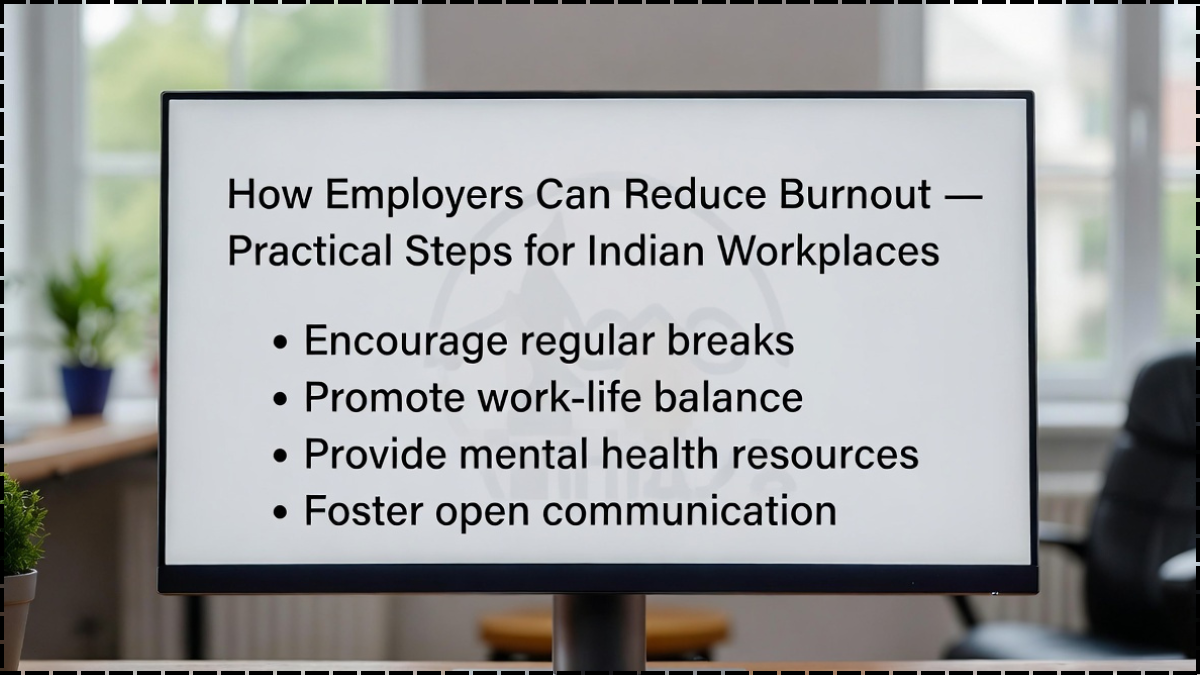
Organizations aiming to improve mental health at workplace india must implement structured strategies rather than isolated initiatives. HR policies should integrate well-being into performance systems. Counseling services must be accessible and confidential. Leadership training should emphasize empathy and resilience. Regular assessments of employee burnout help track progress. A culture of open communication reduces stigma and encourages help-seeking behavior.
Practical employer actions:
- Conduct burnout risk assessments
- Provide accessible counseling
- Update hr policies for flexibility
- Train managers in mental health awareness
- Promote resilience programs
- Encourage work-life boundaries
These steps create sustainable improvements in mental health at workplace india.
Conclusion
Mental health at workplace india has become a critical priority as employee burnout rises across industries. Organizations that integrate supportive hr policies, accessible counseling, and resilience-building initiatives create healthier and more productive environments. Addressing psychological well-being is no longer optional but essential for sustainable business success. By fostering supportive cultures and proactive interventions, Indian employers can reduce burnout, strengthen resilience, and enhance overall workforce performance in the evolving modern workplace.
FAQs
What is mental health at workplace india?
It refers to organizational efforts to support employee well-being and prevent employee burnout through hr policies, counseling, and resilience programs.
What causes employee burnout in India?
Long hours, high pressure, poor work-life balance, and lack of support contribute to employee burnout in Indian workplaces.
How can HR policies improve mental health?
Flexible schedules, mental health leave, and supportive frameworks reduce burnout and strengthen mental health at workplace india.
Why is counseling important at work?
Counseling helps employees manage stress and emotional challenges, improving resilience and productivity.
How can employers build resilience?
Training, supportive leadership, and balanced hr policies help employees adapt to stress and prevent burnout.
Click here to know more.