In today’s digital world, screens have become a natural part of childhood, shaping how kids learn, play, and connect with others. As technology continues to evolve, parents are looking for balanced approaches that encourage healthy development without completely restricting digital access. Establishing effective screen time rules for kids is becoming one of the most important aspects of modern digital parenting. Rather than banning devices, families are focusing on creating structured routines that help children use technology responsibly while maintaining physical activity and social interaction.
The conversation around child screen habits has shifted significantly in 2026. Screens are no longer viewed solely as distractions; they are also tools for education, creativity, and communication. However, without proper guidance, excessive use can lead to sleep issues, reduced focus, and behavioral challenges. By developing clear screen time rules for kids, parents can help children build healthy relationships with technology and avoid the negative effects associated with overuse.
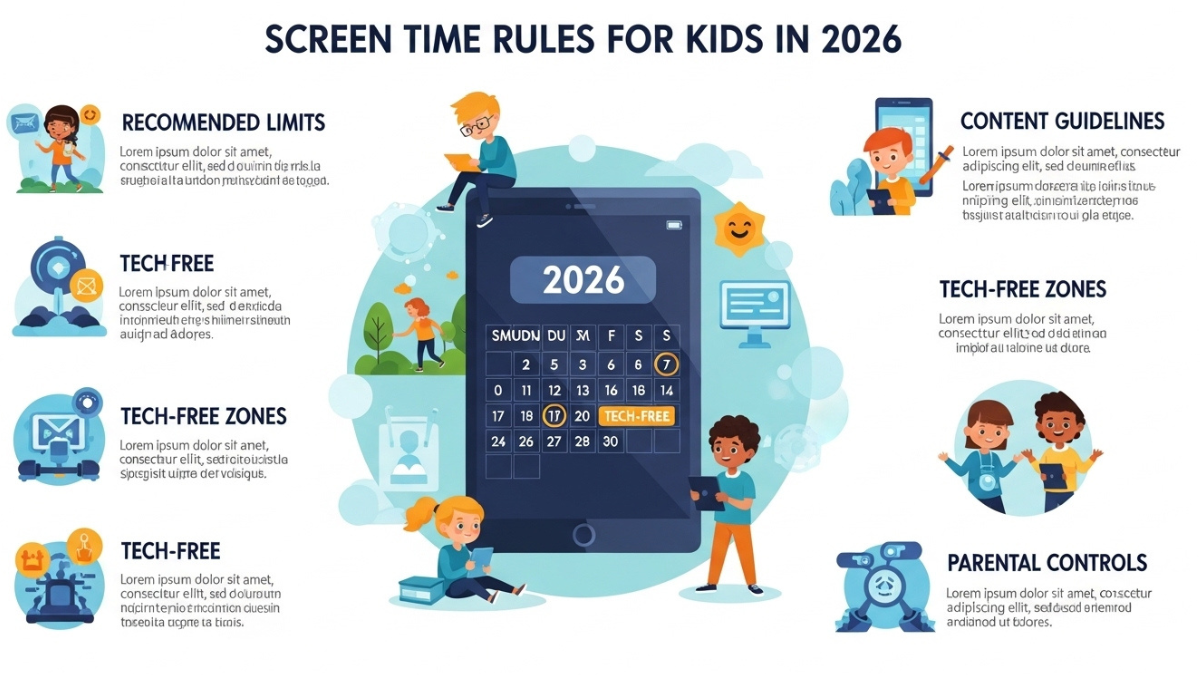
Why Digital Parenting Matters More Than Ever
Modern digital parenting involves more than setting time limits. It requires understanding how children interact with digital platforms and guiding them toward positive experiences. Parents today face unique challenges, including social media exposure, online gaming, and virtual learning environments. Strong screen time rules for kids provide structure and help children understand when and how technology should be used.
The rise of personalized apps and educational platforms has also influenced child screen habits. Many tools encourage learning through interactive games, which can be beneficial when used appropriately. By balancing entertainment with educational content, parents practicing effective digital parenting can support both academic growth and emotional well-being. Clear communication and consistency remain key elements in building responsible screen behaviors.
Recommended Screen Time Rules for Different Age Groups
One of the most effective ways to manage screen time rules for kids is to tailor guidelines based on age and developmental needs. Younger children may require stricter boundaries, while older kids benefit from more flexible rules that encourage self-regulation. Some widely recommended strategies include:
- Creating device-free zones during meals and family time
- Setting bedtime limits to protect sleep quality
- Encouraging outdoor activities alongside digital use
- Monitoring content quality rather than only time spent
- Teaching children to recognize signs of excessive screen use
These practices help shape positive child screen habits while reinforcing the importance of balance in digital parenting. Instead of focusing solely on restrictions, parents can use these rules to foster trust and responsibility.
Below is a table outlining suggested screen time approaches by age group:
| Age Group | Suggested Screen Time Approach | Parenting Focus |
|---|---|---|
| 0–5 Years | Minimal supervised use | Interactive learning |
| 6–10 Years | Structured daily limits | Healthy routines |
| 11–14 Years | Balanced educational and recreational use | Self-awareness |
| 15–18 Years | Flexible guidelines with accountability | Responsible digital behavior |
This framework helps parents adapt screen time rules for kids to meet changing developmental needs.
Building Healthy Child Screen Habits at Home
Developing positive child screen habits requires consistency and active involvement from parents. Modeling healthy behavior is one of the most effective strategies in digital parenting. When children see adults balancing screen use with offline activities, they are more likely to adopt similar habits.
Another important aspect of screen time rules for kids is encouraging creative and educational uses of technology. Activities such as coding games, virtual art classes, or educational videos can transform screen time into meaningful learning experiences. By guiding children toward high-quality content, parents can ensure that digital exposure supports growth rather than distraction.
Challenges Parents Face With Screen Time in 2026
Despite best efforts, maintaining healthy child screen habits can be challenging. Peer pressure, social media trends, and online gaming communities often influence children’s behavior. This makes consistent digital parenting essential for setting boundaries that align with family values.
Another challenge involves balancing school-related screen use with recreational activities. As digital learning becomes more common, parents must differentiate between productive and excessive screen time. Clear screen time rules for kids help establish expectations and reduce conflicts, making it easier to maintain harmony within the household.
Conclusion: Creating Balanced Digital Lives for Kids
In 2026, the goal of screen time rules for kids is not to eliminate technology but to promote healthy, balanced usage. Through thoughtful digital parenting, families can encourage positive child screen habits that support learning, creativity, and emotional well-being. Establishing routines, modeling good behavior, and maintaining open communication are key steps toward achieving this balance.
As technology continues to shape childhood experiences, parents who adapt their approach will be better equipped to guide their children responsibly. By focusing on quality, structure, and understanding, screen time rules for kids can help young people thrive in a connected world.
FAQs
What are effective screen time rules for kids in 2026?
Effective screen time rules for kids include setting clear limits, encouraging offline activities, and monitoring content quality.
How does digital parenting help children?
Digital parenting guides children toward responsible technology use while supporting healthy emotional and social development.
What are common child screen habits parents should watch for?
Parents should monitor excessive gaming, late-night screen use, and reduced physical activity as signs of unhealthy child screen habits.
Should educational screen time be limited?
Educational screen use can be beneficial, but balanced screen time rules for kids ensure that learning and rest remain equally important.
How can parents encourage better child screen habits?
Consistency, open communication, and modeling healthy behavior are key strategies in improving child screen habits.
Click here to know more.